The off-brand problem
Why testimonial widgets always look off-brand.
It's not a styling preference — it's structural. Widget vendors ship one design system for thousands of sites, so your proof section arrives wearing someone else's brand. Here's why it happens and how a brand scan fixes it.
trustproovr team · for launch-stage founders
The short version
One skin for a million sites — that's the wall most founders hit. trustproovr's answer: it asks your users when they're engaged, drafts the testimonial from how they actually use the product, and renders the ones you approve looking native to your site.
- Brand scan instead of hex fields
- Runtime token inheritance
- Shadow-DOM isolated
The problem
1. One skin for a million sites
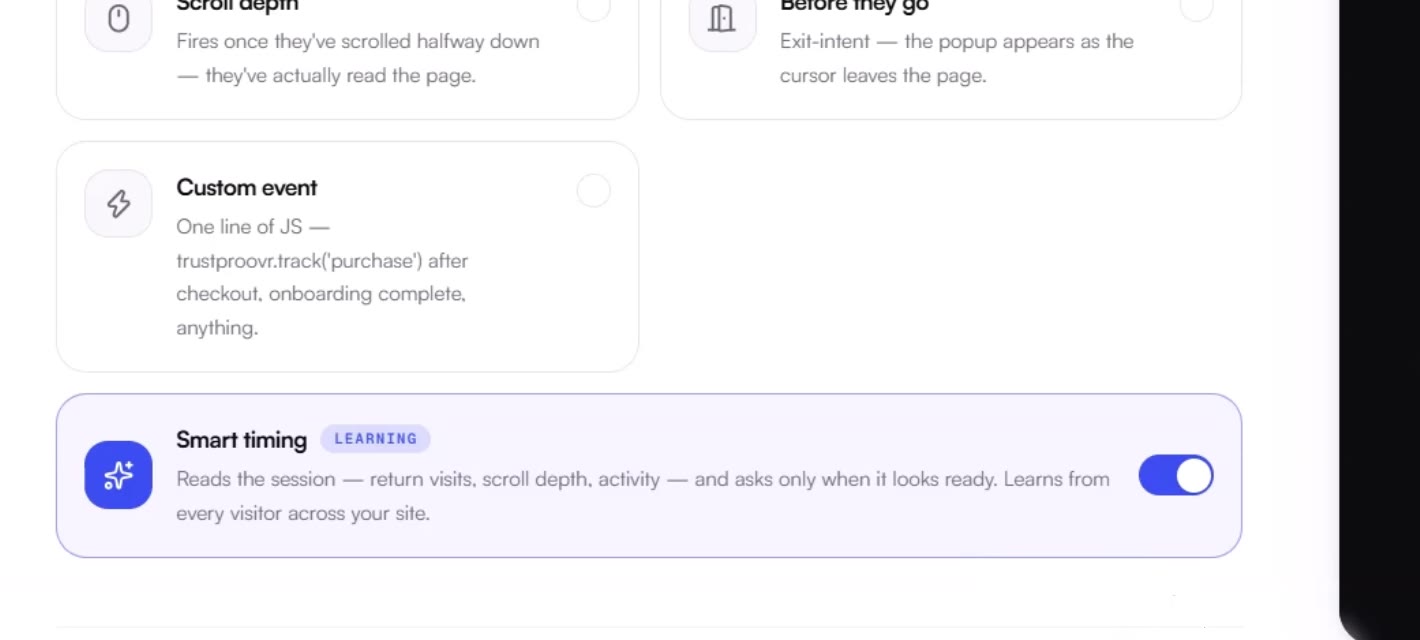
Widget vendors design once and ship to everyone. Your proof gets their typeface, their radius, their accent — visitors' eyes register 'embed' before 'review.'
- One script tag — no plugins
- Draft written from real usage
2. Theming is manual archaeology

A hex field and a font dropdown can't reproduce a design system. You end up approximating your own site by eye.
- Asks only when the session's engaged
- You approve before it ships
3. Trust transfers the wrong way
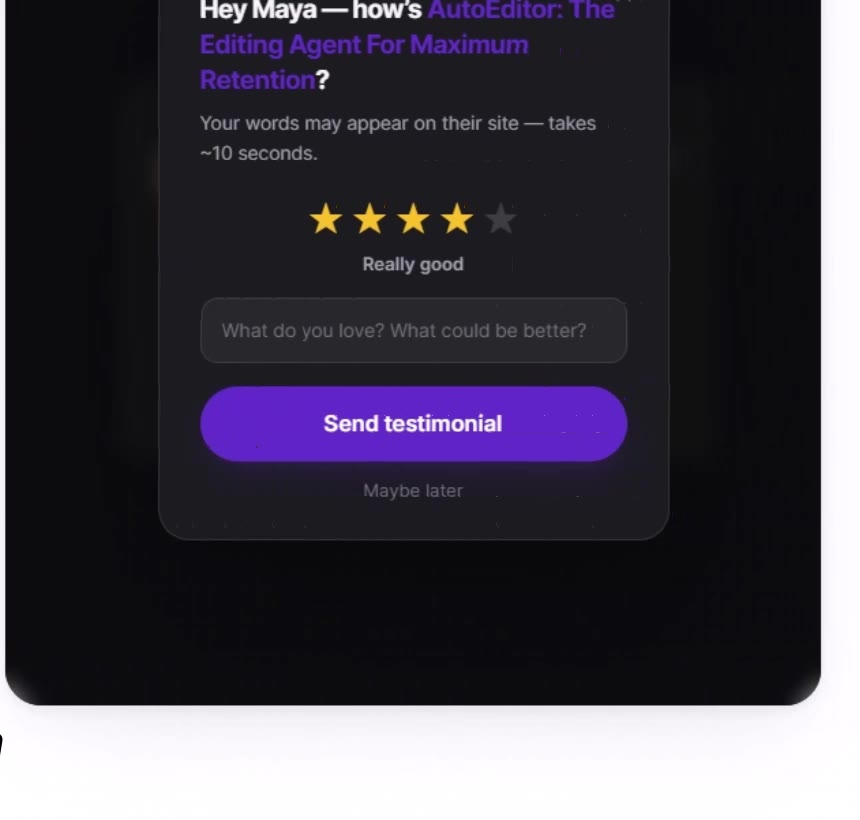
Off-brand proof borrows credibility from the widget maker, not from you. A 'powered by' badge literally diverts it.
- Draft written from real usage
- Renders in your fonts + colors
What trustproovr does about it
Turns the users you have into proof.
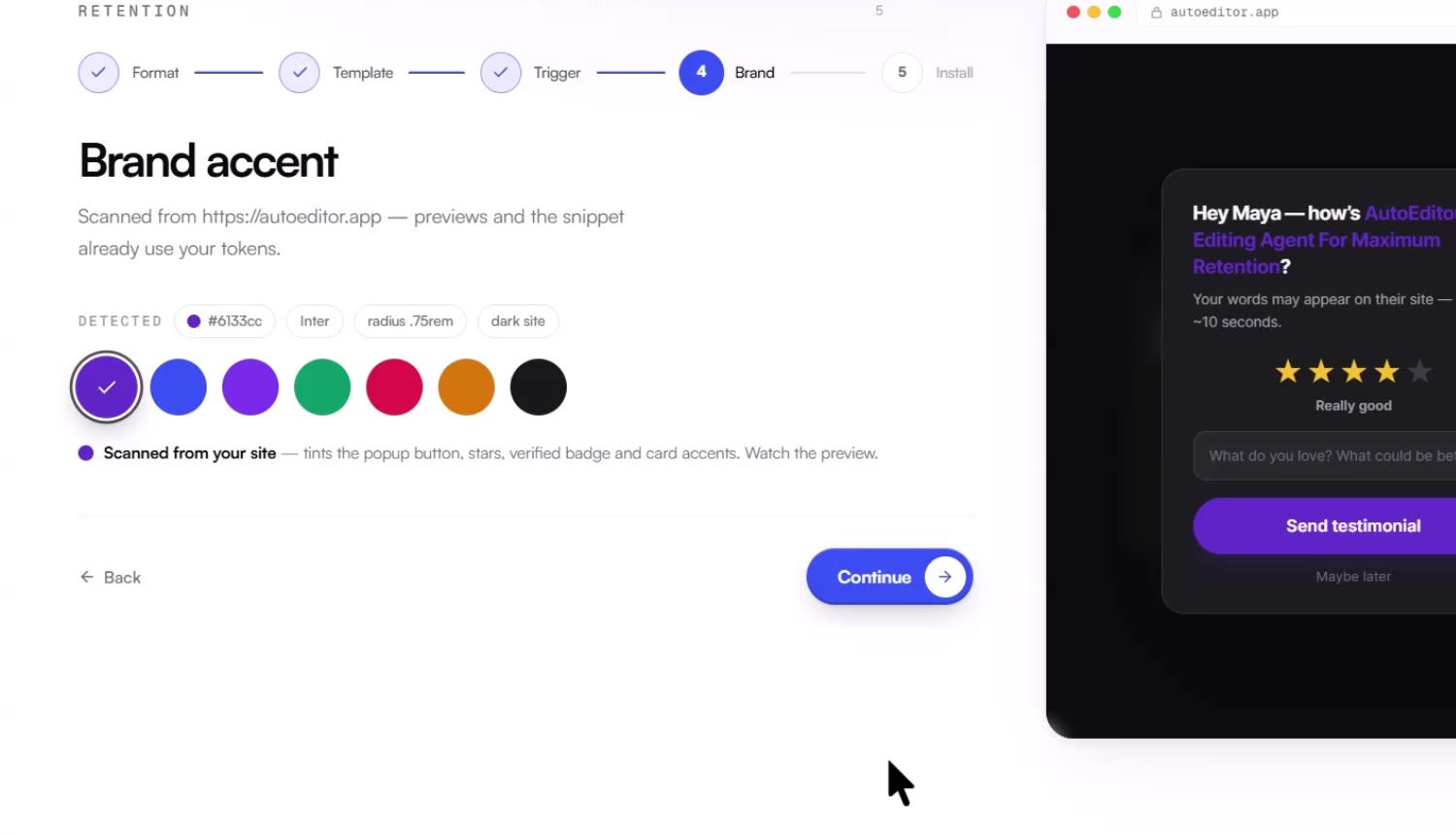
1. Brand scan instead of hex fields
Paste your URL — accent, font stack, radius and dark mode are extracted automatically. The wall is themed before you choose a layout.
- One script tag — no plugins
- Draft written from real usage
2. Runtime token inheritance
The widget reads your CSS variables live. Rebrand your site and the wall follows without a settings change.
- Asks only when the session's engaged
- You approve before it ships
Free trial
Real testimonials, zero chasing.
One snippet. The ask fires when they're engaged, the draft writes itself, you approve.
Start collecting — free3. Shadow-DOM isolated

Your styles can't leak in and theirs can't leak out — the proof just looks like part of the page.
- Draft written from real usage
- Renders in your fonts + colors
4. You approve every word
Scanned tokens
Everything lands in a moderation queue. Nothing goes live on your homepage until you approve it.
- Manual or AI-assisted approval
- Nothing publishes without sign-off
Free trial
Real testimonials, zero chasing.
One snippet. The ask fires when they're engaged, the draft writes itself, you approve.
Start collecting — freeQuestions
Can't I just fix it with custom CSS?
You can approximate, but a design system is more than a hex — font stack, radius scale, spacing rhythm, dark mode. Hand-theming drifts the moment your site changes.
What does the brand scan actually pull?
Accent color, font stack, corner radius, and light/dark theme — extracted from your live site, not eyeballed.
What happens when I rebrand?
Nothing breaks — the widget reads your CSS variables at runtime, so the wall follows your new tokens automatically.
Keep exploring
Your customers already love you. Prove it.
Paste one snippet — the ask fires at the right moment, in your brand.
Build your widget — free